Why Does Glow-in-the-Dark Yarn Glow Differently? Uniform vs Striped Explained

The Two Types of Glow-in-the-Dark Yarn: Why Some Glow Uniformly and Others Glow in Stripes
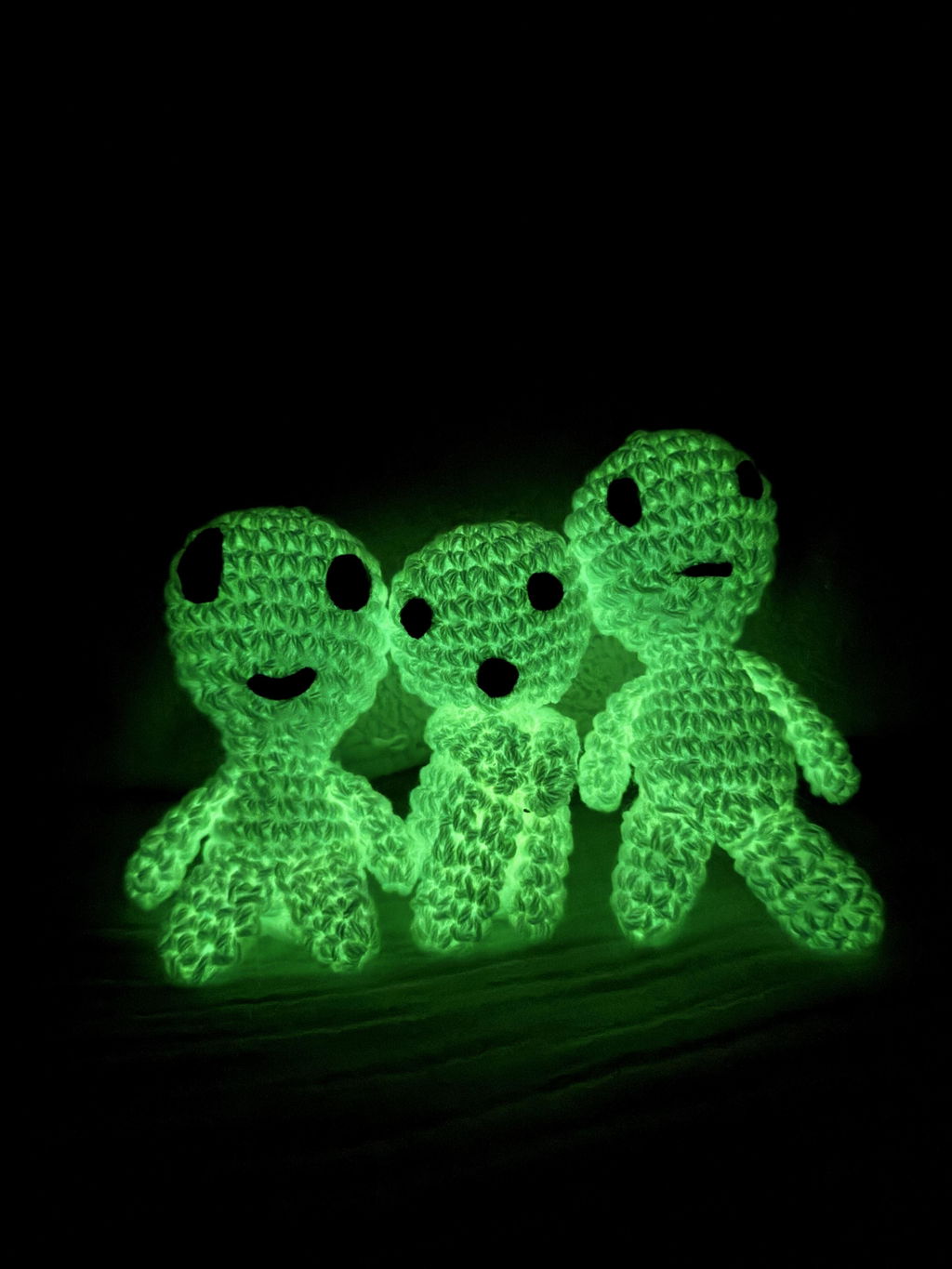
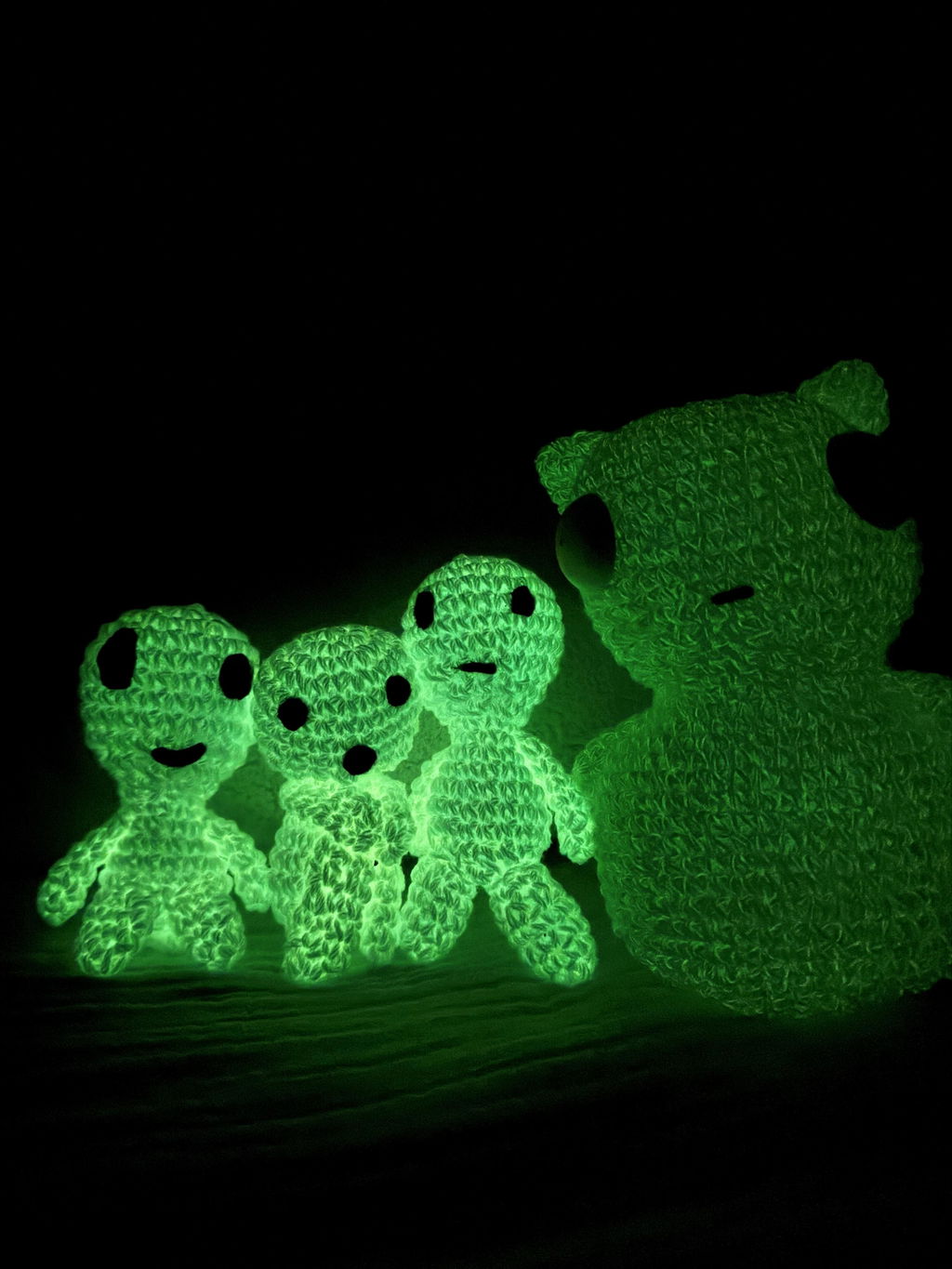
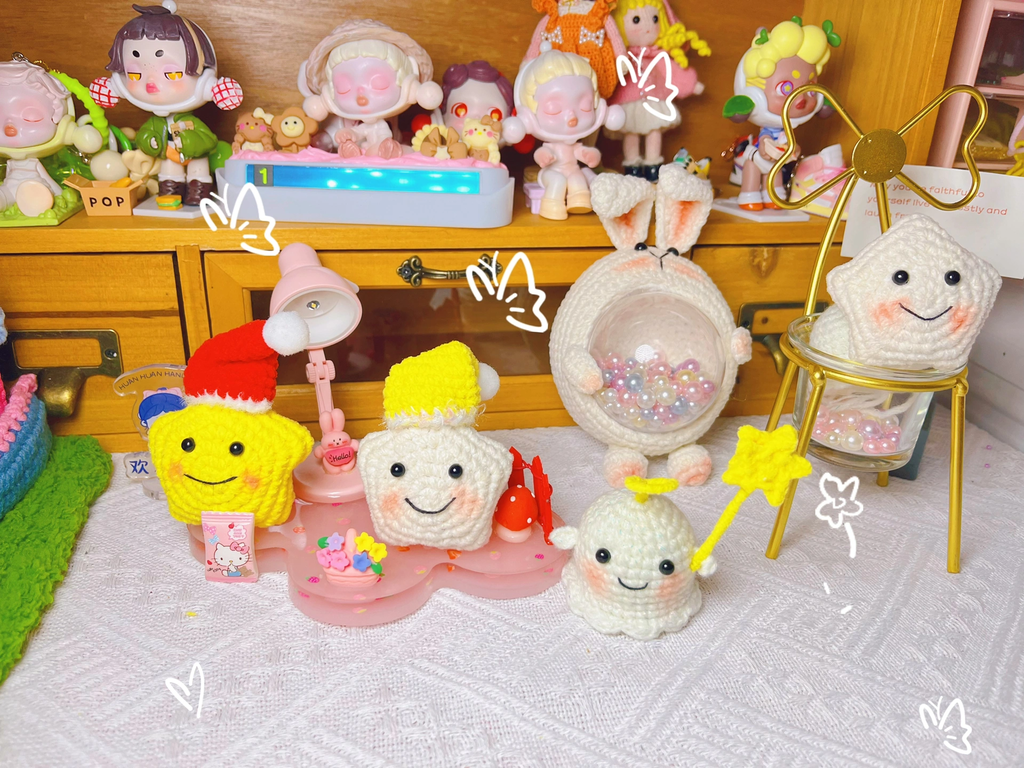
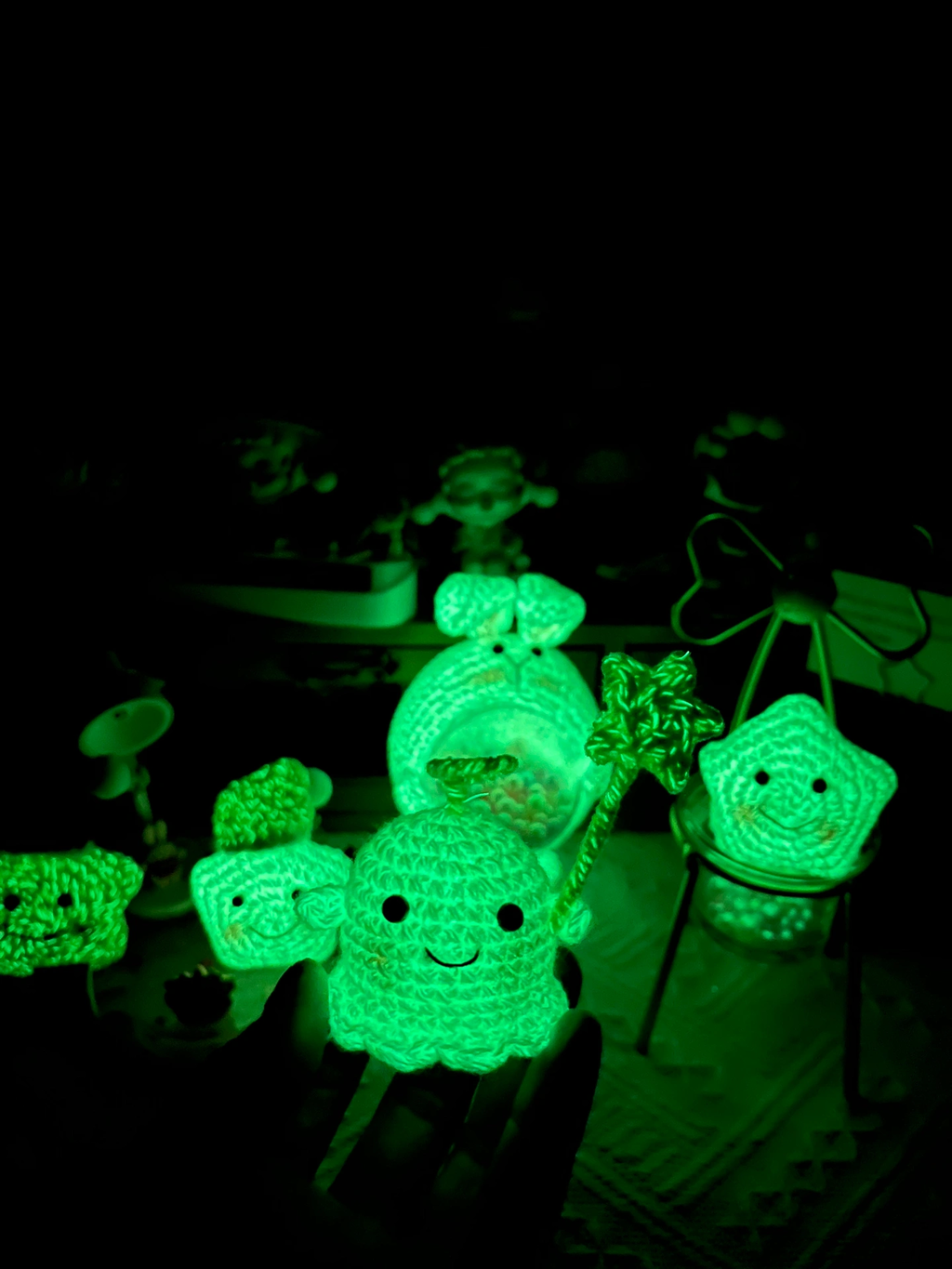
A customer messaged us recently, very upset. She'd made a glow-in-the-dark amigurumi alien using a different brand's yarn. The whole figure had glowed evenly in the dark, like the alien itself was the light source. When her yarn ran out, she found our shop online, ordered a similar lilac glow yarn, and made a second piece. This time, the alien glowed in streaks — bright green lines running across its body instead of a uniform field.
She thought we'd misrepresented the product. We refunded her order, apologized, and got to work writing this guide — because the technical reason for what she experienced is something almost no yarn shop explains, and once you understand it, glow-in-the-dark yarn shopping makes a lot more sense.

Discussion on Reddit: Join the conversation about glow-in-the-dark yarn glow patterns.
This is the explainer we wish had existed when we first started developing glow yarn six years ago.
What is glow-in-the-dark yarn, technically?
Glow-in-the-dark yarn is yarn that contains phosphorescent pigment — typically strontium aluminate (the modern standard, brighter and longer-lasting) or zinc sulfide (older, dimmer, less common today). The pigment absorbs ambient light when exposed to it, then slowly releases that energy as visible light in the dark. The chemistry is the same as glow-in-the-dark stars on a bedroom ceiling.
The interesting question is how that pigment ends up in the yarn. There are two completely different industrial methods, and they produce visibly different results.

Method 1: Phosphorescent Masterbatch Filament (Uniform Glow)
In the masterbatch method, the factory blends phosphorescent pigment directly into polyester pellets — the raw material that gets melted and extruded into synthetic fiber. The pigment-loaded pellets are heated, melted, and pushed through tiny spinneret holes to form continuous filaments. Every individual fiber emerges with glow pigment baked into its core.
Those fibers are then cut, carded, and spun into yarn the normal way. The finished yarn glows uniformly across its entire surface in the dark, because every fiber in it is luminescent.
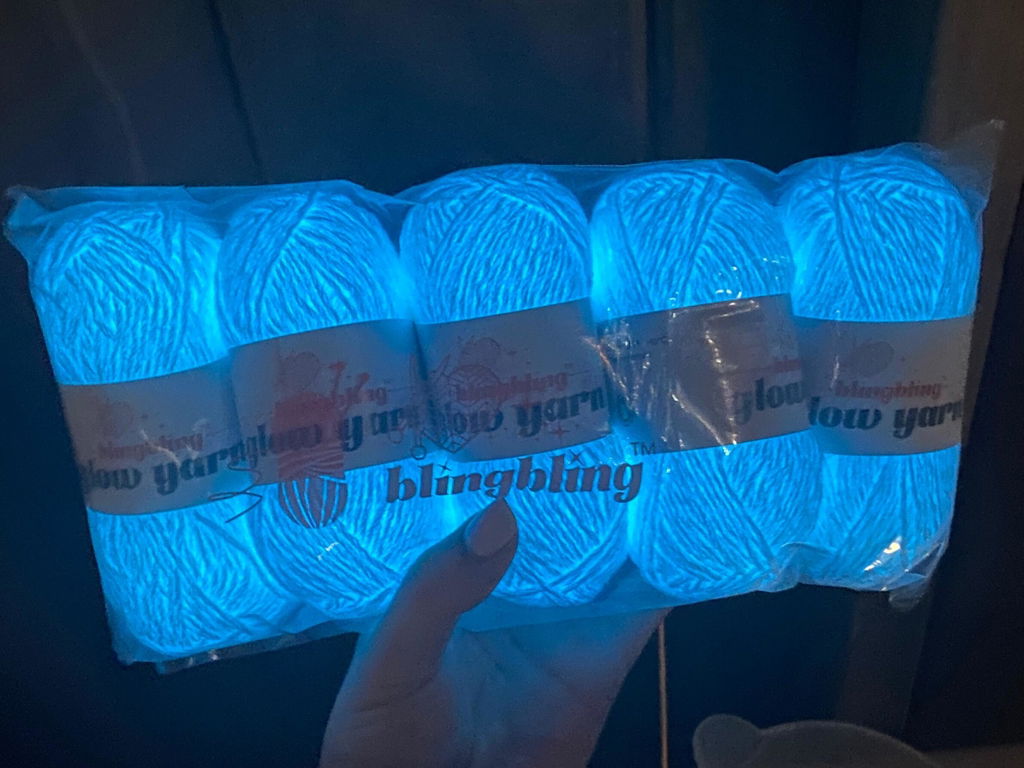
This is the most common type of glow-in-the-dark yarn on the market. When you see "11-color glow-in-the-dark yarn package" listings on Amazon, AliExpress, Etsy, or in craft chains, you are almost always looking at masterbatch filament yarn. BlingBlingYarn carries a traditional masterbatch line as well, because for certain projects it's exactly the right product.

What masterbatch yarn does well:
- Even, uniform glow with no visible structure
- The finished knit or crochet object appears to be the light source itself
- Predictable, consistent results across an entire skei

What masterbatch yarn cannot do (the trade-offs nobody mentions on the listing):
- Color is locked to roughly 11 standard pastels. The phosphor pigment has its own tint, which limits the base colors that can carry it. This is why every brand selling this style of yarn offers nearly identical color packages — they're all sourcing from the same masterbatch suppliers.
- Material is locked to polyester. Melt-spinning only works with thermoplastic polymers. You cannot make masterbatch glow yarn from cotton, wool, silk, bamboo, or any natural fiber.
- Brightness is capped. Pigment loading is limited by the need to keep the fiber spinnable — too much pigment and the filament becomes brittle and breaks during spinning.
- Glow duration is typically 1–3 hours of useful brightness before fading to barely visible.
- Slight off-white or pale yellow tint in daylight, because the phosphor pigment carries its own color even when not glowing.
Method 2: Plied Phosphorescent Filament (Stranded Glow)
The plied filament method is a more recent and significantly more complex approach. Instead of mixing pigment evenly throughout every fiber, manufacturers produce a single, ultra-bright glow filament with much higher pigment concentration than masterbatch fiber can support. That dedicated glow filament is then spun, twisted, or plied together with a separate base yarn — which can be cotton, wool, acrylic, blends, or virtually any spinnable fiber.
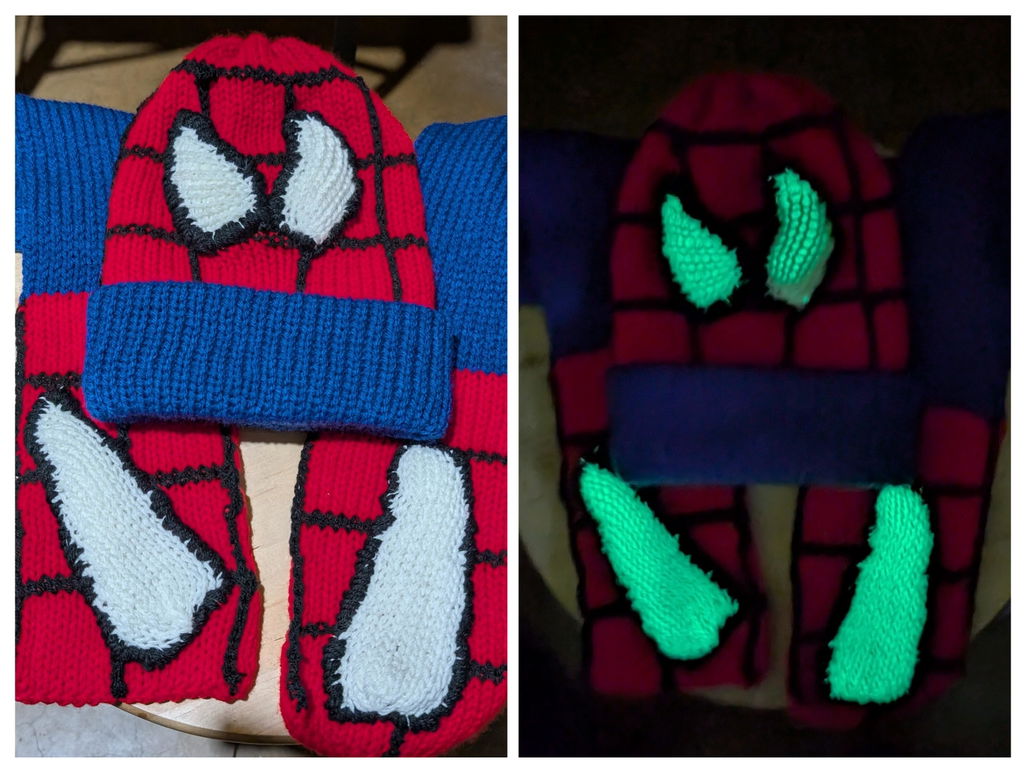
In daylight, plied phosphorescent yarn looks like ordinary yarn. You typically cannot see the glow filament at all. In the dark, the base yarn stays dark, the glow filament glows brilliantly, and the result is a stranded, stripe-like luminous pattern — bright lines tracing through the structure of the yarn.
This is the technique BlingBlingYarn focused on developing. We spent roughly twelve months and over forty rounds of sampling getting a stable, dye-fast plied glow yarn into production, because the trade-offs solved a problem we kept hearing from advanced makers: they wanted glow effects that didn't lock them into pastel polyester.
What plied phosphorescent yarn does well:
- Any base color. Because the glow effect is delivered by a separate filament, the base yarn can be any dyed shade — saturated jewel tones, neutrals, deep navy, charcoal, dusty rose, sage green, anything.
- Any base material. Cotton, acrylic, wool blends, eco-friendly recycled fibers — none of these are possible with masterbatch.
- Significantly higher brightness and longer glow duration (typically 6–8 hours of useful glow versus 1–3 hours for masterbatch), because the dedicated glow filament can carry a much higher pigment load without compromising spinnability of the overall yarn.
-
Clean daylight color, since the base yarn isn't tinted by the phosphor pigmen

What plied phosphorescent yarn does not do:
- It does not produce a uniform field of glow. If you want a finished object that looks like a single luminous surface in the dark — like our customer's first amigurumi alien — Method 1 is the correct tool, not Method 2.
Method 1 vs. Method 2: Side-by-side comparison
| Feature | Method 1: Masterbatch Filament | Method 2: Plied Phosphorescent Filament |
|---|---|---|
| Glow appearance | Uniform, all-over | Stranded, stripe-like |
| Available base colors | ~11 standard pastels | Unlimited (any dyeable color) |
| Available materials | Polyester only | Cotton, wool, acrylic, blends, recycled fibers |
| Useful glow duration | 1–3 hours | 6–8 hours |
| Brightness | Moderate | High |
| Daylight color clarity | Slight tint from pigment | Clean, true to dye |
| Cost | Lower | Higher |
| Best for | "Glowing object" aesthetic | Color-rich projects, natural fiber needs, high-visibility applications |
How to tell which one you are buying
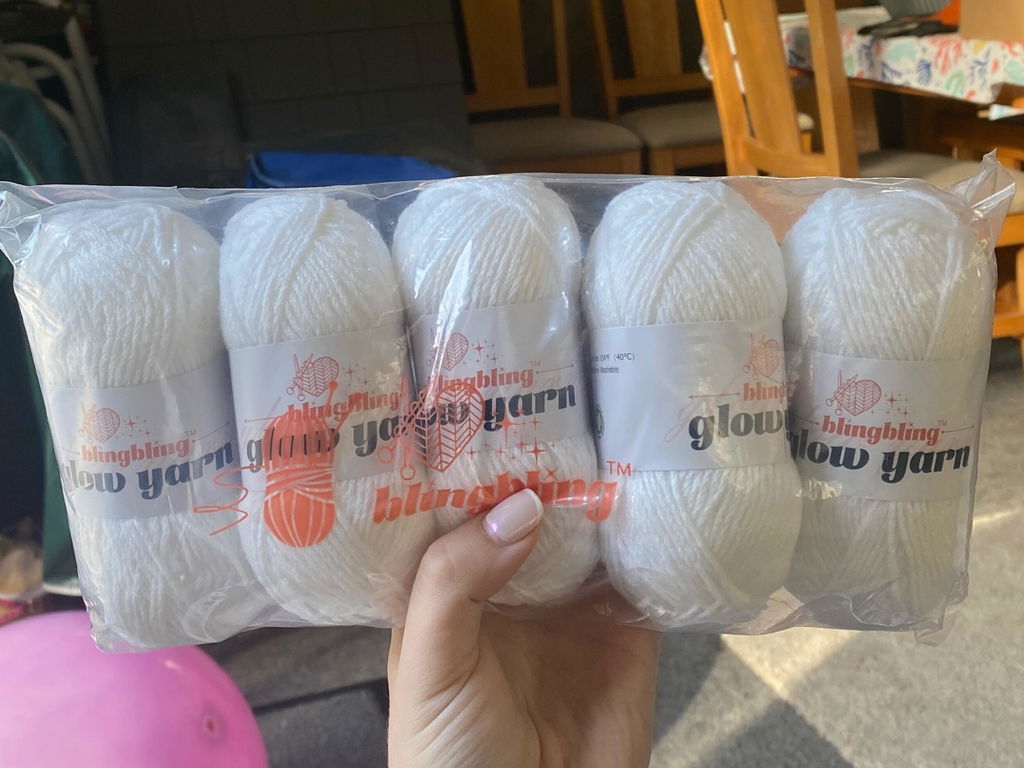
Most yarn listings — including, until this year, ours — simply say "glow-in-the-dark yarn" with one daylight skein photo and one generic glow shot. That isn't enough information to know what you're getting. Here's what to look for:
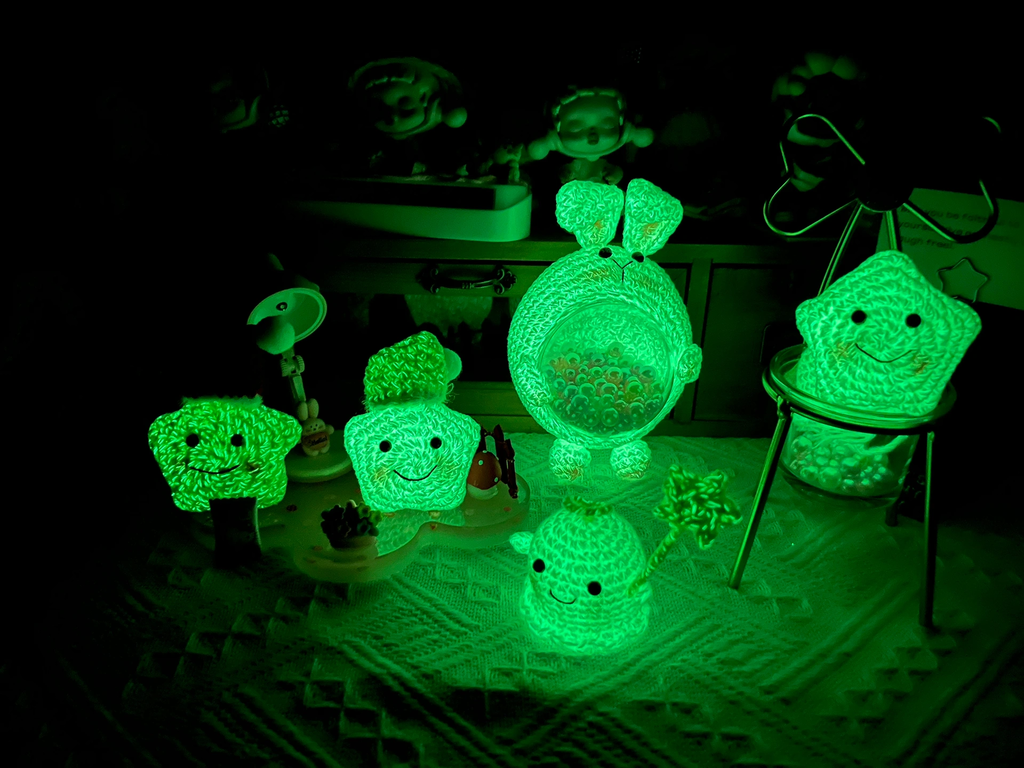
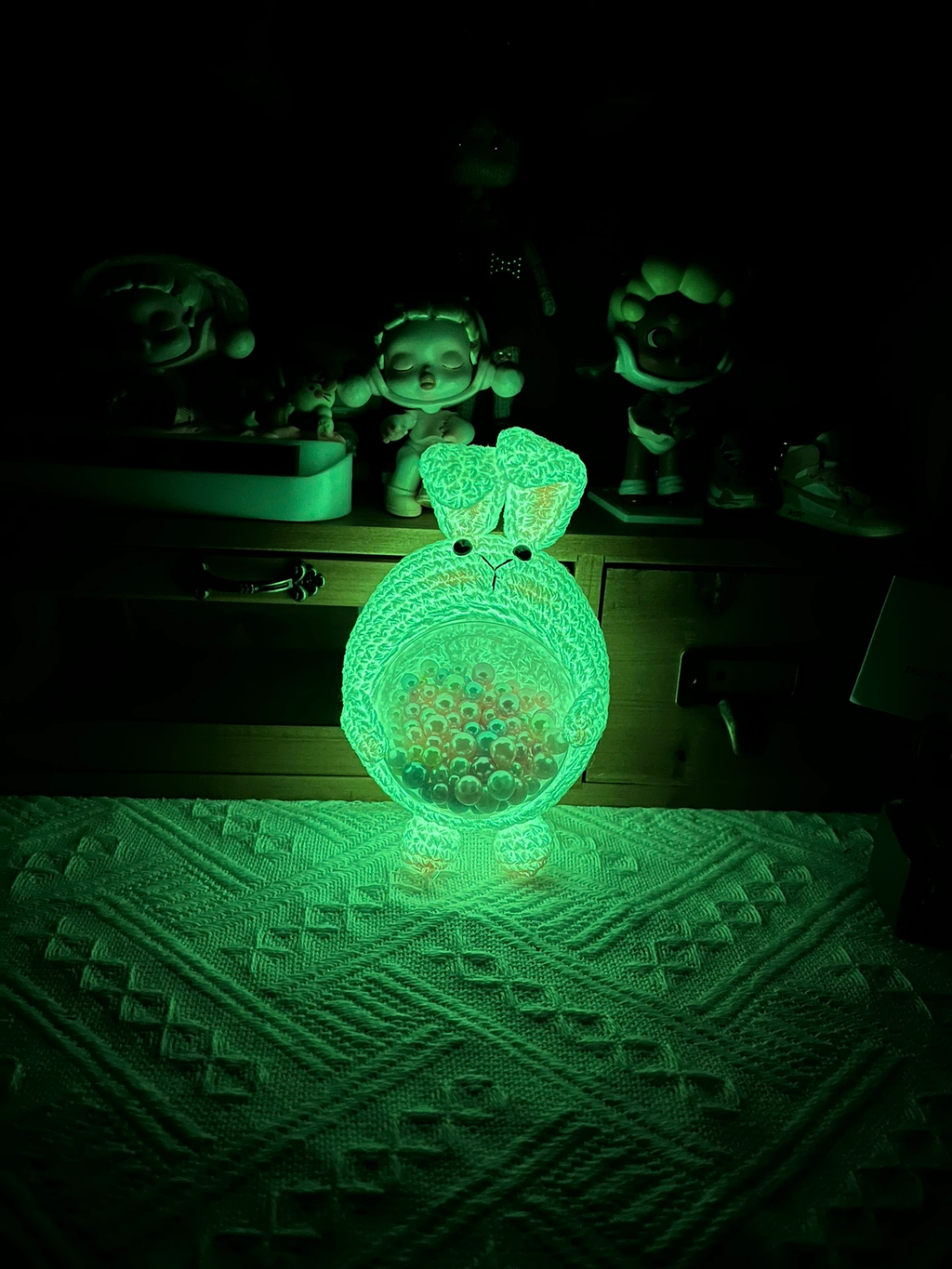
- Look for night-mode photos of finished knit or crochet objects, not just the skein. A skein photo cannot reliably show the difference between uniform and stranded glow. A photo of a finished swatch or completed project absolutely can.
- Check the fiber content. If the listing says 100% polyester and the color palette has 8–12 specific pastel options, you are almost certainly looking at masterbatch filament (Method 1).
- Check for cotton, wool, or blend content. If the yarn is glow-in-the-dark and contains any natural fiber, it has to be plied phosphorescent filament (Method 2). The masterbatch process physically cannot produce natural-fiber glow yarn.
- Check the glow duration claim. Sellers who specify glow time in hours are usually being more honest. Anything claiming "all night" without qualification is marketing, not measurement.
- Read the question section if there is one. Buyers asking "is the glow even or does it look like stripes?" are buyers who got surprised. Their questions are valuable signal.
We've now added a "glow style: uniform vs. stranded" tag to all BlingBlingYarn product pages, after this customer experience. Both styles deserve to exist; buyers just need to know which one they're getting.

Why we focused on Method 2 — and what it unlocks
When we started BlingBlingYarn, the entire glow-in-the-dark yarn category looked the same. The same eleven pastel colors. The same polyester base. The same modest glow duration. Every listing was effectively the same product with a different brand label, because every brand was sourcing from the same upstream masterbatch suppliers.
The plied phosphorescent filament method changes the economics of what's possible. Once the glow effect is decoupled from the base fiber, you can:
- Match glow yarn to existing palettes. A maker working on a deep teal sweater can have a deep teal yarn that also glows. Previously this was impossible.
- Use natural and sustainable fibers. Cotton glow yarn for warm-weather projects. Wool-blend glow yarn for cooler-weather wearables. We released the first wool-blend glow yarn we know of last year, and a recycled-fiber glow yarn line is on our roadmap for this year.
- Develop seasonal color collections without being constrained by what masterbatch suppliers happen to offer. BlingBlingYarn releases a new color collection roughly every 6–8 weeks, including limited drops tied to seasons, holidays, and color trends. Most of these colors are physically not possible to produce in Method 1 yarn.
- Build effects beyond glow. The same plied-filament technique that delivers phosphorescent glow can also deliver reflective filament, color-changing thermochromic filament, UV-reactive filament, and conductive filament. Our specialty yarn lines are all built on variations of this approach.
We still sell traditional masterbatch glow yarn, because for amigurumi like our customer's alien — where the glowing-object aesthetic is the point — it remains the right tool. But the bulk of our development work now goes into expanding what plied phosphorescent yarn can do, because that's the part of the category where there's still real innovation room.

Frequently asked questions about glow-in-the-dark yarn
Why does my glow-in-the-dark yarn glow in stripes instead of uniformly? Because it is plied phosphorescent yarn (Method 2), not masterbatch filament (Method 1). The glow effect is delivered by a single bright filament twisted into the yarn, rather than evenly distributed through every fiber. The stripes you see are the glow filament catching its charge. This is the intended structure of the product, not a defect.
How long does glow-in-the-dark yarn glow? Most masterbatch filament yarns glow usefully for 1–3 hours. High-quality plied phosphorescent yarns glow usefully for 6–8 hours. In both cases, "glow" fades gradually rather than ending sharply — you'll see strong glow for the first hour, dim glow for several hours after, and faint glow into the morning.
What charges glow-in-the-dark yarn? Any visible light source charges phosphorescent pigment. Sunlight charges fastest (1–2 minutes for a strong charge), followed by white LED, fluorescent, and incandescent lighting (5–15 minutes). UV light charges fastest of all but is not necessary.
Can wool yarn glow in the dark? Only via Method 2 (plied phosphorescent filament). Method 1 (masterbatch) requires melt-spinning, which only works with synthetic thermoplastic fibers. Any wool, cotton, silk, or other natural-fiber yarn that glows in the dark has to use the plied filament approach.
Does glow-in-the-dark yarn fade over time? The glow effect itself does not permanently fade — phosphorescent pigment can be charged and discharged indefinitely. The yarn's structural integrity, dye colorfastness, and pilling behavior are the same as for any yarn of comparable fiber content.
Is glow-in-the-dark yarn safe? Yes, for both methods. Modern phosphorescent pigments (strontium aluminate is now standard) are non-toxic, non-radioactive, and skin-safe. Older zinc sulfide pigments are also non-toxic but dimmer. Both have been used in children's products for decades.
Why is masterbatch glow yarn always available in the same 11 colors? Because the phosphor pigment loaded into the polyester fiber has its own tint, which limits which base colors the dyed fiber can convincingly carry. The eleven-color palette is essentially the entire color universe of the masterbatch method. Any glow-in-the-dark yarn outside that palette is using Method 2.
For more community insights on why some glow-in-the-dark yarn glows in streaks, see this Reddit discussion.

A note on shopping for specialty yarn generally
The glow-in-the-dark category is a useful illustration of a broader pattern in specialty yarn: two products that look identical in a daylight photo can behave completely differently in use. This is also true of reflective yarn (glass-bead vs. metallic filament), color-changing yarn (thermochromic vs. photochromic), and metallic yarn (lurex vs. true metal-wrapped). In every case, the manufacturing method drives the result, and the listing usually doesn't tell you which method.
The single best thing you can do as a buyer is ask sellers directly: what's the manufacturing method, and do you have a photo of a finished piece? Sellers who can answer the first question and provide the second are the ones worth ordering from. Those who can't, generally aren't.
BlingBlingYarn develops and produces specialty yarns including glow-in-the-dark, reflective, color-changing, UV-reactive, conductive, and eco-friendly fiber lines. We release new color collections and material drops roughly every 6–8 weeks. If you'd like a heads-up when new colors and materials drop, [join our newsletter] or follow [@blingblingyarn] on Instagram.
"Most of what we make wouldn't have been possible five years ago. The interesting work in specialty yarn now is in the manufacturing methods, not the aesthetics — once you can change how the yarn is built, the aesthetics open up on their own." — Liu, BlingBlingYarn founder