UV & Blacklight Reactive Yarn: How It Really Works

UV & Blacklight Reactive Yarn: How It Really Works
Blacklight yarn looks like a magic trick the first time you see it. Under daylight it's an ordinary bright yarn. Switch on an ultraviolet lamp and the same yarn flips to a neon glow that seems to come from inside the fiber. Switch the lamp off and it's gone — instantly.
That instant on/off behaviour is the clue to what's actually going on, and it's why UV reactive yarn is not the same thing as glow-in-the-dark yarn. Here's the difference, and how to use it.
Quick Answer
UV reactive yarn doesn't glow in the dark and doesn't store light. Its fluorescent dye absorbs invisible ultraviolet light from a blacklight and immediately re-emits it as visible neon colour — the moment the blacklight goes off, the glow stops. Glow-in-the-dark (phosphorescent) yarn is the opposite: it stores light and releases it slowly.
Three Different Effects, Three Different Words
Crafters (and product listings) mix these up constantly. They are three separate technologies:
| Phosphorescent ("glow in the dark") | Fluorescent ("UV / blacklight reactive") | Retroreflective ("reflective") | |
|---|---|---|---|
| What it needs | Any light, to charge it first | An ultraviolet light source | A directed beam aimed at it |
| When it glows | After the light is gone, in the dark | Only while the UV light is on | Only while the beam is on it |
| Effect disappears | Slowly (it fades out) | Instantly (on/off) | Instantly (on/off) |
| Visible in daylight? | Looks like ordinary yarn | Looks like bright ordinary yarn | Looks dull until a beam hits it |
| Typical look | Soft green/blue/aqua glow | Neon, electric, high-contrast | A white-hot flash back at you |
| Classic real-world use | Glow stars, watch dials, safety signage | Blacklight posters, nightclub décor | Road signs, hi-vis trim, bike reflectors |
If a product "glows in the dark" with no light source at all, it's phosphorescent. If it only lights up under a blacklight, it's fluorescent. If it flashes when your phone torch hits it, it's reflective.
How Fluorescence Works, Without the Chemistry Degree
Fluorescent dyes are a bit like one-way translators for light.
- The dye absorbs ultraviolet light — which your eyes can't see.
- That energy excites the dye molecules for a fraction of a second.
- They shed the energy again as visible light — the neon colour you see.
Because the incoming UV is invisible, your brain sees only the outgoing colour. That's why the yarn seems to "switch on" the second the blacklight does, and why there's no afterglow when it switches off: nothing was stored. The effect exists only while the energy is being supplied.
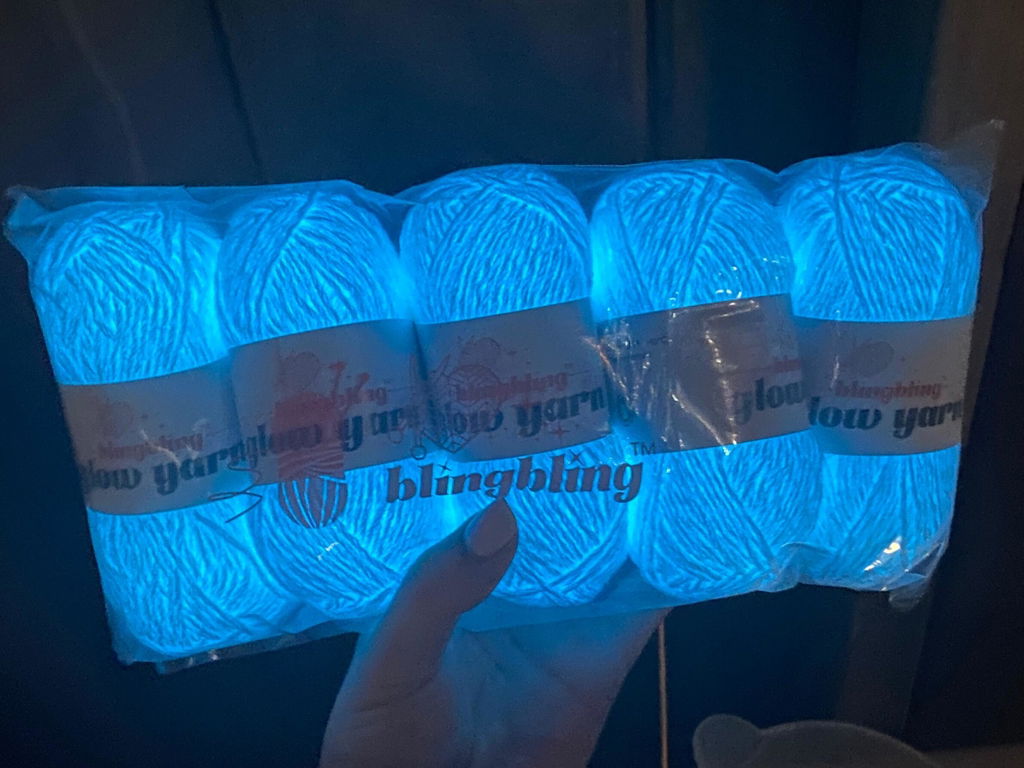
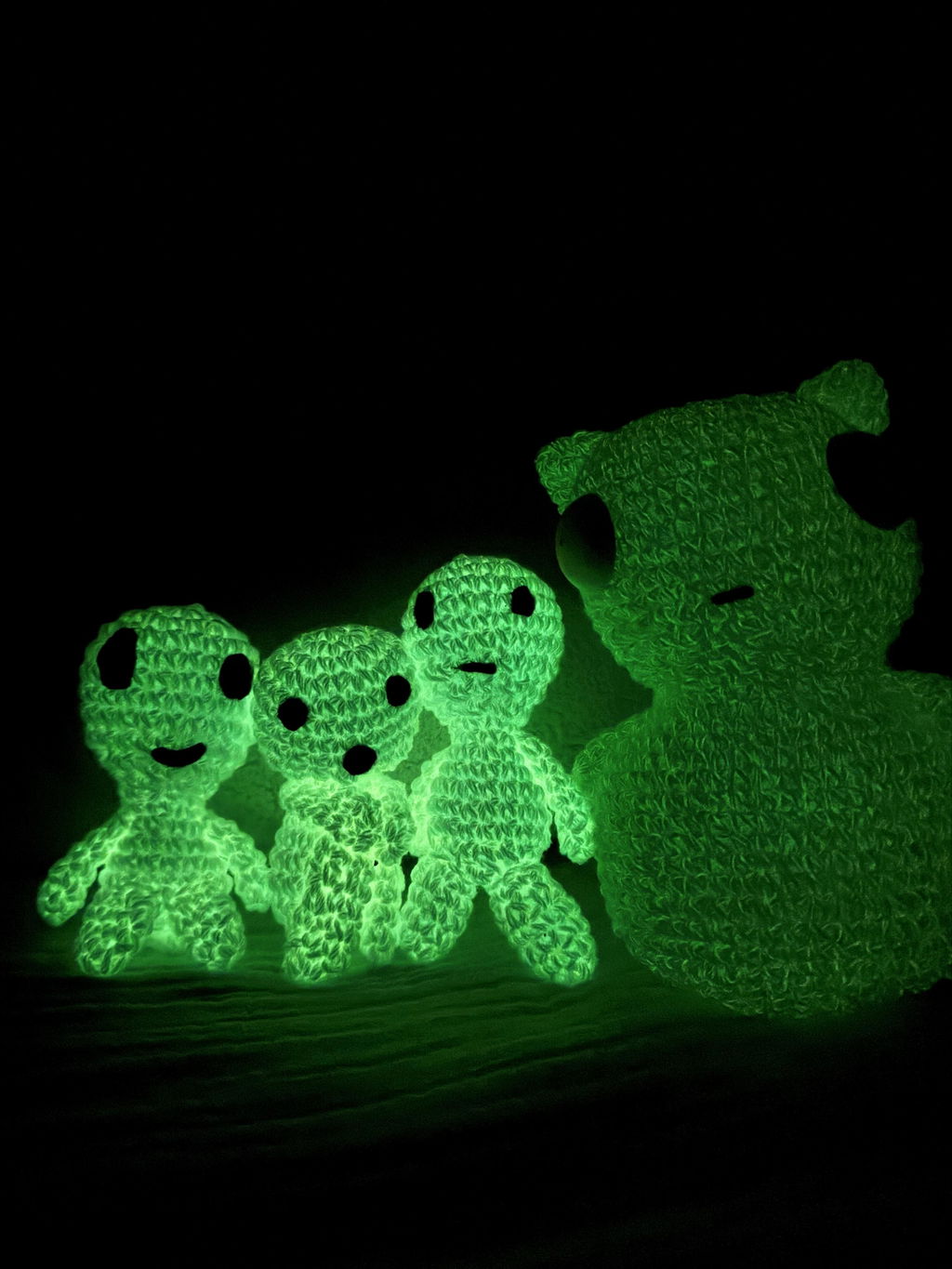
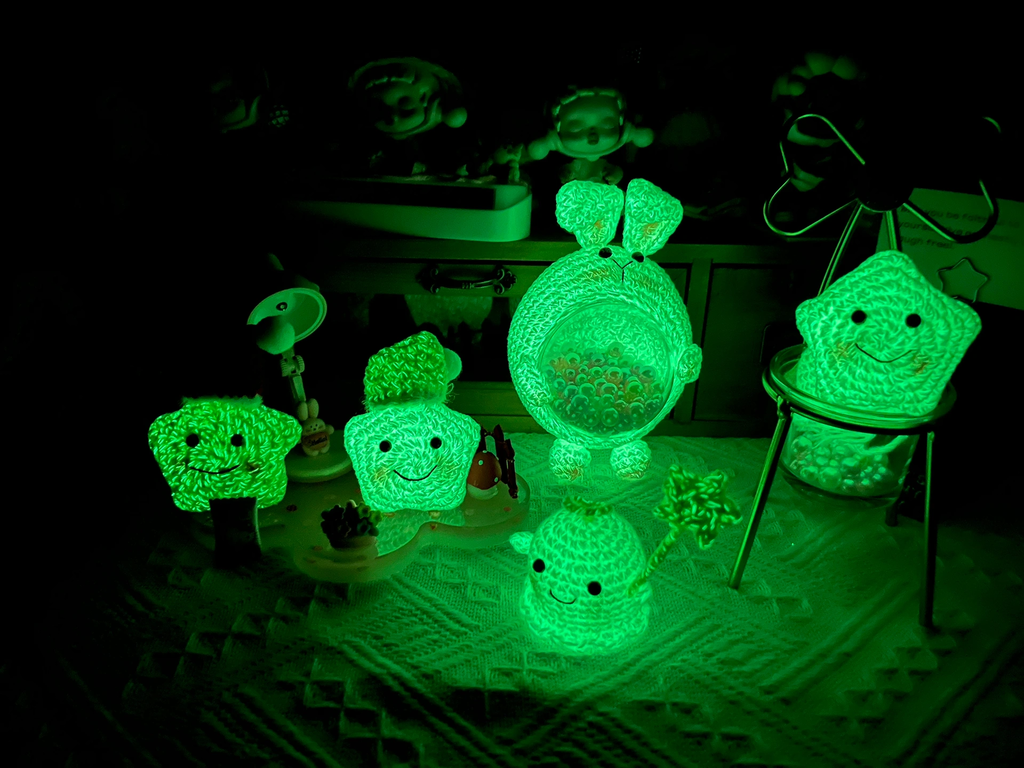
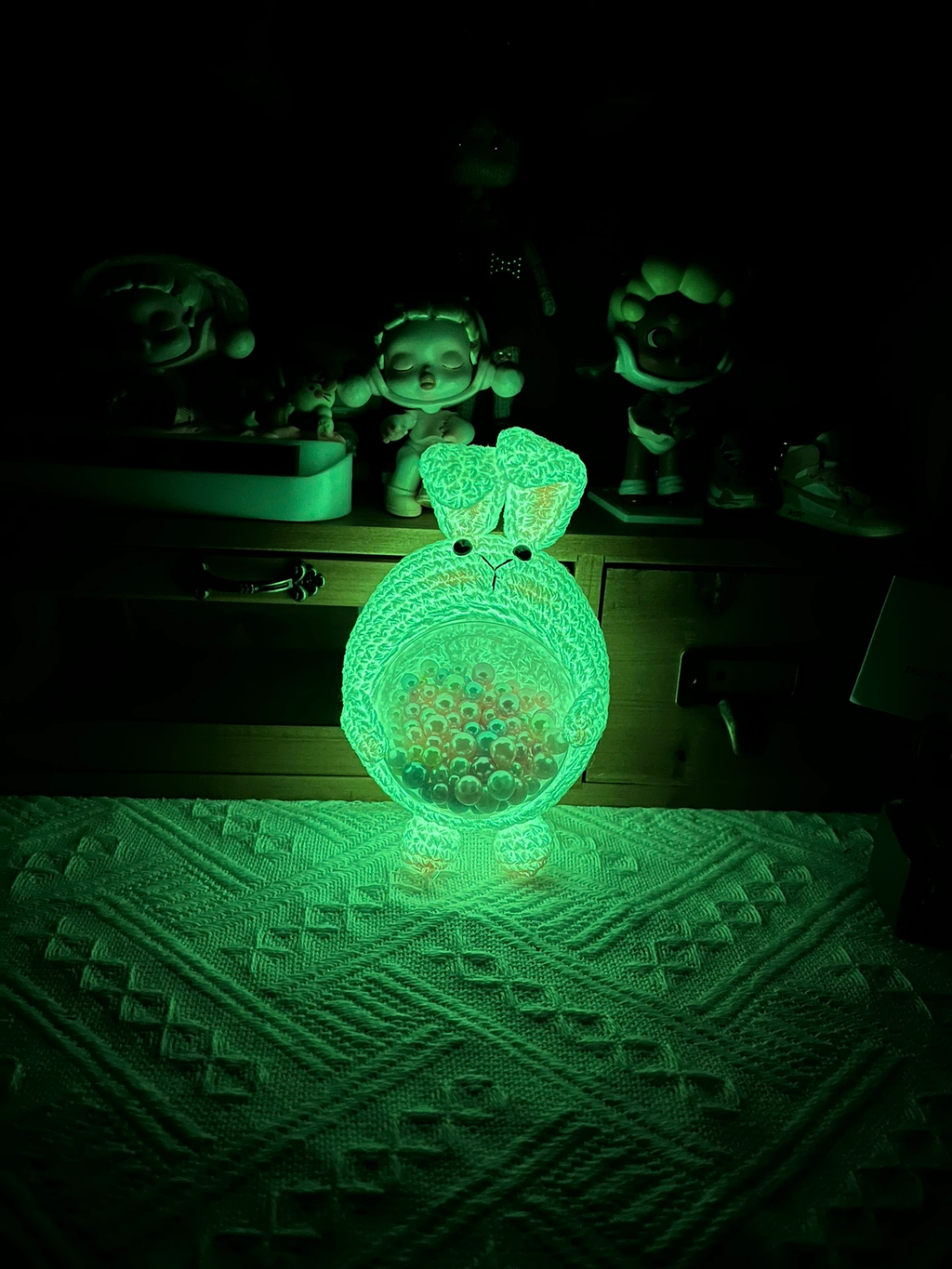
Contrast that with phosphorescent (glow-in-the-dark) yarn, which works like a slow-release battery: it absorbs light, traps the energy in the pigment, and trickles it back out over time. That's why glow yarn keeps working after the lights go out, and why it looks dimmer the longer it's been discharging.
Why Blacklights Make It Look So Dramatic
A blacklight (UV lamp) is designed to emit mostly ultraviolet light with very little visible light. In a dark room, your eyes are getting almost no visible illumination — so anything that doesn't fluoresce looks nearly black. The fluorescent parts of your project are the only things converting UV into visible colour, which is exactly why the contrast is so extreme.
Practical consequence: UV reactive yarn looks best where there's little other visible light. A blacklight in a sunlit room does almost nothing. The same blacklight in a dark room at a party turns a scarf into a light fixture.
What UV Reactive Yarn Is Good For
- Rave, festival and club wear — crop tops, arm warmers, bucket hats, leg warmers, bucket bags
- Halloween and costume pieces — spider webs, ghosts, neon trim, glowing accessories
- Escape rooms, glow parties and themed events — bunting, table runners, wall hangings
- Photography and content — blacklight portraits and product shots where one element pops
- Kids' activities — a blacklight torch and a fluorescent keychain is a whole evening's entertainment
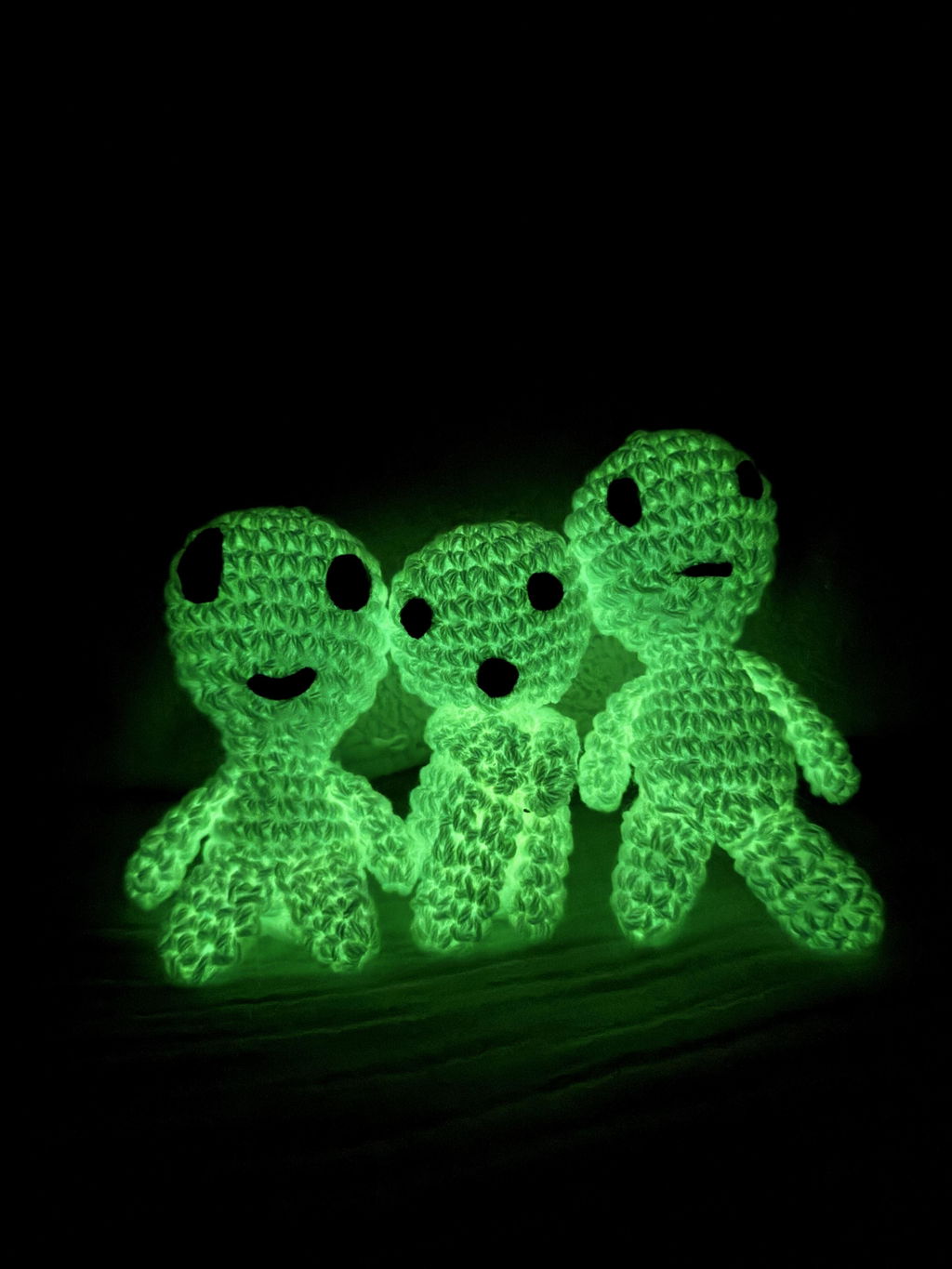
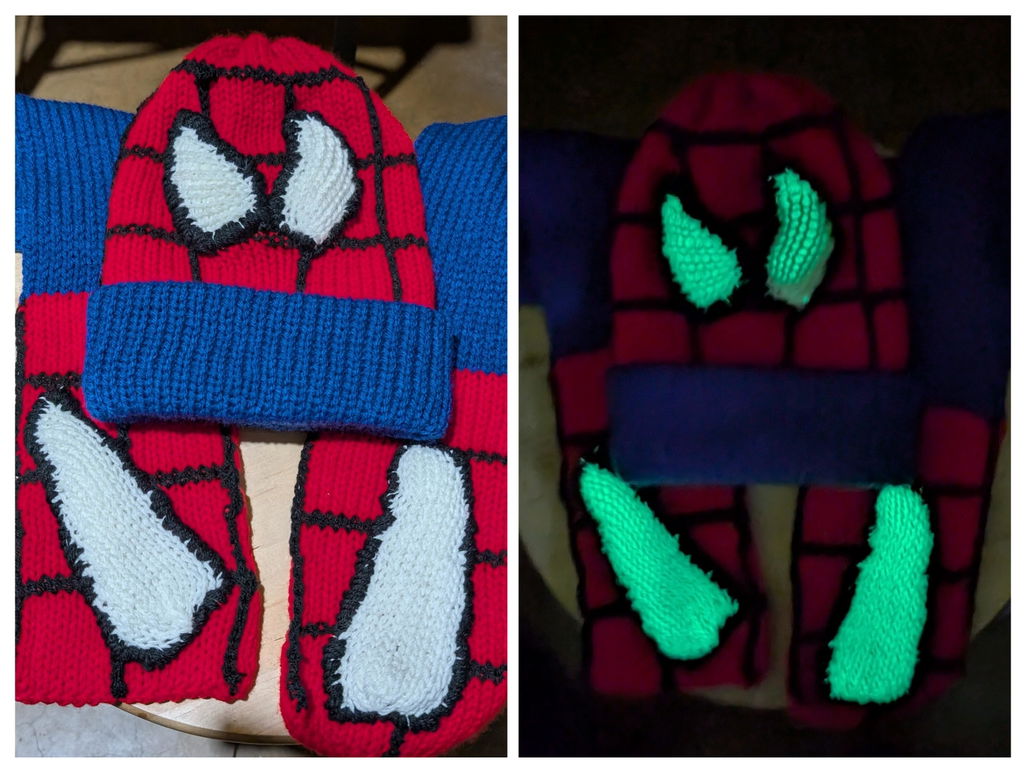
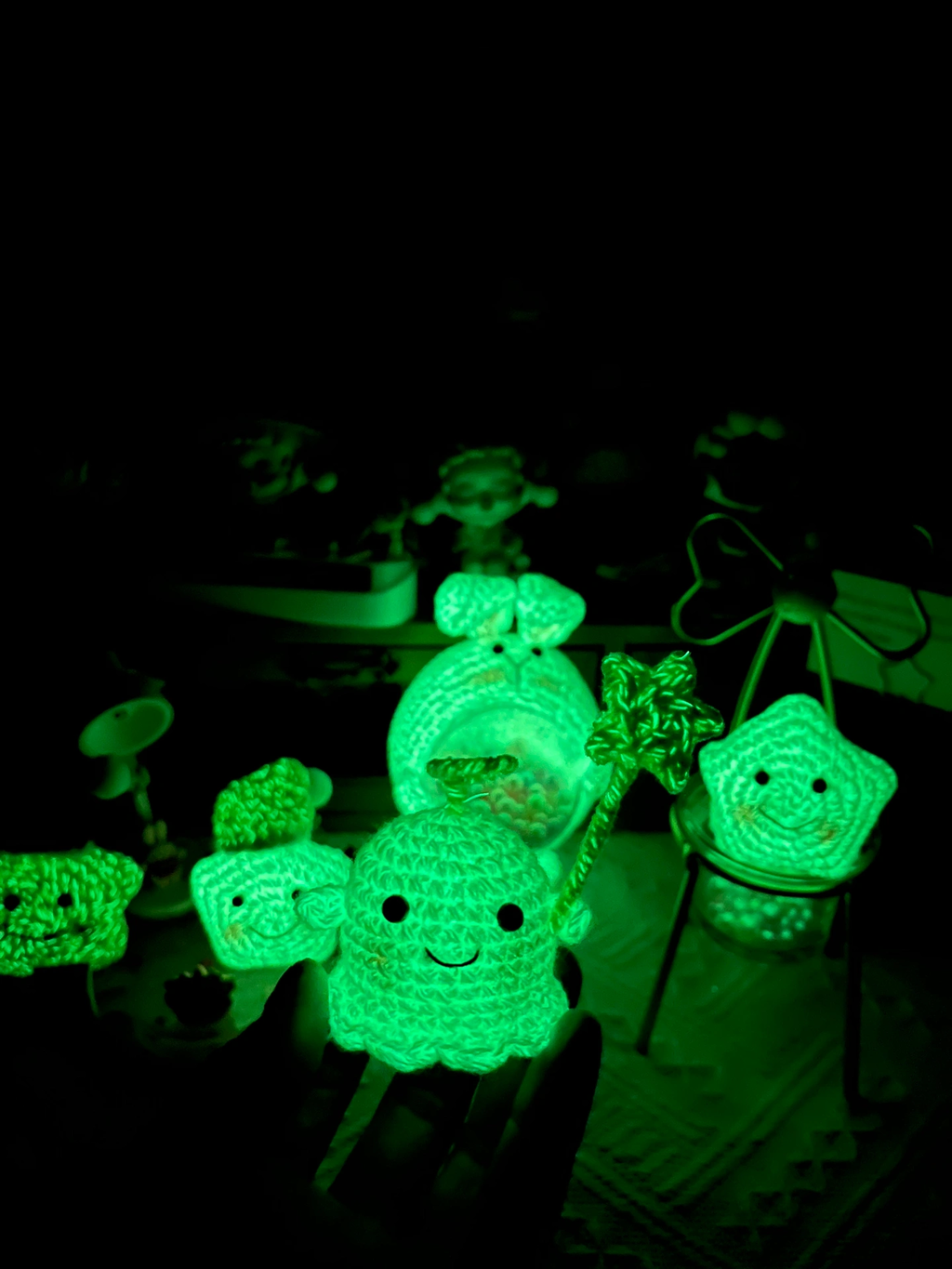
- Dual-effect projects — pair fluorescent yarn with glow-in-the-dark yarn: the fluorescent part answers the blacklight, the phosphorescent part keeps glowing after it's switched off
Getting the Best Effect (Practical Tips)
- Work in a genuinely dark room. Every extra visible light source flattens the effect.
- Use a UV source, not a blue bulb. A blue-painted bulb looks blue; a true blacklight makes fluorescent material emit colour.
- Know your light source's spread. UV LED strips give even coverage across a wall hanging or table; a handheld torch is better for spot-checking and for photography.
- Lighter base colours read brighter. Fluorescent dye on a white or pale base shows more clearly than the same dye on a dark base.
- Mix with matte yarn for contrast. A fluorescent accent against a plain, non-reactive yarn is more striking than an all-fluorescent piece.
- Check it before you commit. Test a length under the actual blacklight you'll be using — colours can read differently under different UV sources.
Care, Washing and Storage
- Hand wash in cool water with a mild detergent, or use a laundry bag on a gentle cycle if the yarn's care label allows machine washing.
- No bleach, no fabric softener. Both can degrade fibres and dyes over time.
- Air dry away from direct heat.
- Store out of prolonged direct sunlight. UV is what drives the effect, so long-term intense UV exposure is what ages fluorescent and phosphorescent materials — a drawer or covered basket is better than a sunny windowsill.
- Treat fluorescent pieces like any dyed textile. Until you know how a specific yarn behaves, wash an accent piece separately the first time rather than with a load of whites.
Frequently Asked Questions
Is UV reactive yarn the same as glow-in-the-dark yarn? No. UV reactive (fluorescent) yarn only lights up while an ultraviolet light is shining on it, and stops instantly when the light goes off. Glow-in-the-dark (phosphorescent) yarn absorbs light and then keeps emitting a soft glow by itself in the dark.
Does UV reactive yarn glow in a dark room with no blacklight? No. Without an ultraviolet source there's nothing for the fluorescent dye to convert, so it looks like ordinary yarn.
Do I need a real blacklight, or will a blue light work? Use a genuine UV/blacklight source. A blue-tinted bulb mostly emits visible blue light, which makes everything in the room look blue instead of making the fluorescent material emit its own colour.
Is UV reactive yarn safe to wear? It uses fluorescent dyes in a textile application, and the same class of material is used in blacklight posters, festival wear and stage décor. Our supplier holds ISO 9001, SGS, GRS and OEKO-TEX certifications at company level. ⚠️ We do not publish per-SKU test documents yet, and we don't claim a specific certification for a specific item — if you need documentation before buying, ask us and we'll check the file.
Can I wash UV reactive yarn projects? Yes — hand wash cool with mild detergent, skip bleach and fabric softener, and air dry. Wash a new fluorescent piece separately the first time.
Will the colour fade over time? Any fluorescent material can lose intensity with prolonged exposure to strong UV, the same way a blacklight poster left in a sunny window fades. Normal wear indoors, plus sensible storage, is the way to keep it looking its best. We don't publish a fade figure — that depends on the yarn and the conditions.
Is it the same as reflective yarn? No. Reflective (retroreflective) yarn bounces a beam of light — like a headlight or phone torch — straight back toward its source. Fluorescent yarn converts invisible UV into visible colour. Reflective is about being seen by other people's lights; fluorescent is about emitting colour under a UV lamp.
Can I combine UV reactive, glow and reflective yarns in one project? Yes, and it's one of the most fun things to do with them: reflective accents for headlights, glow yarn for after-dark visibility, and fluorescent details for blacklight events. Choose the yarn for the part of the piece that needs that specific behaviour.
The Bottom Line
UV reactive yarn isn't magic and it isn't glow-in-the-dark — it's fluorescence: invisible UV in, visible colour out, only while the lamp is on. Once you know that, you can plan the whole look: fluorescent for the blacklight, phosphorescent for the after-lights, reflective for the headlights.
Explore our collections: Glow-in-the-Dark Yarn, Reflective Yarn, and the rest of the bulingbuling range at blingblingyarn.com.