How Is Glow-in-the-Dark Yarn Made? From Phosphorescent Powder to Finished Skein
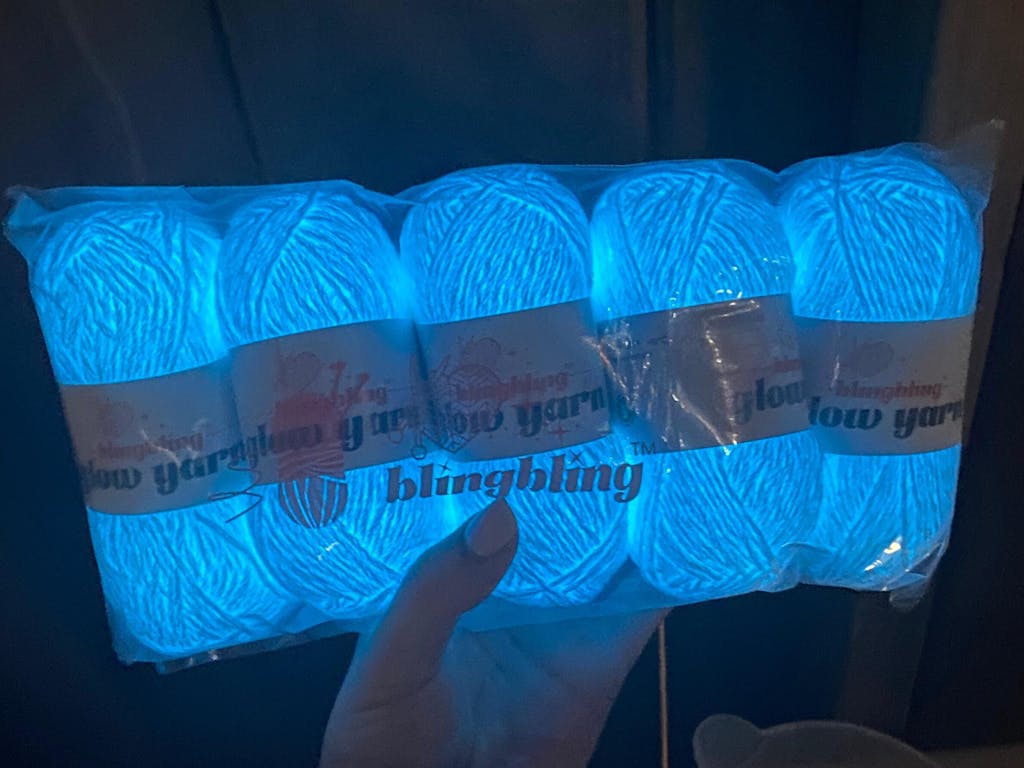
Quick answer: Glow-in-the-dark yarn is made by mixing strontium aluminate phosphorescent pigment into polyester or acrylic pellets before extrusion. The pigment-loaded material is melted and forced through spinnerets to form fibers that glow uniformly. An alternative method twists glow filament with base yarn to create a striped glow effect.
What Raw Materials Are Used to Make Glow Yarn?
Glow yarn starts with two key ingredients:
- Base polymer — typically polyester, acrylic, or nylon pellets. Cotton and wool require a different process since natural fibers can't be melt-extruded with pigment.
- Phosphorescent pigment — strontium aluminate (SrAl₂O₄), doped with europium and dysprosium. This is the same high-performance pigment used in emergency exit signs, capable of glowing for hours after a brief charge.
What is Phosphorescent Masterbatch Filament (Uniform Glow)?
This is the most common method and produces the highest quality glow yarn:
- Masterbatch preparation: Phosphorescent pigment powder is blended with polymer pellets at precise concentrations (typically 15-40% by weight). Higher pigment content = brighter glow but lower tensile strength.
- Melt extrusion: The pigment-loaded pellets are heated to 260-290°C (500-554°F) until molten, then forced through spinnerets — metal plates with tiny holes that form continuous filaments.
- Drawing and quenching: The filaments are cooled (quenched) in air or water, then stretched (drawn) to align the polymer molecules and improve strength.
- Cutting and spinning: The continuous filaments are cut into staple fibers (short lengths), then carded and spun into yarn using traditional spinning machinery.
What is Plied Phosphorescent Filament (Striped Glow)?
This method produces a different visual effect:
- A dedicated bright-glow filament is manufactured separately with very high pigment concentration.
- This glow filament is twisted together (plied) with one or more strands of regular (non-glowing) base yarn.
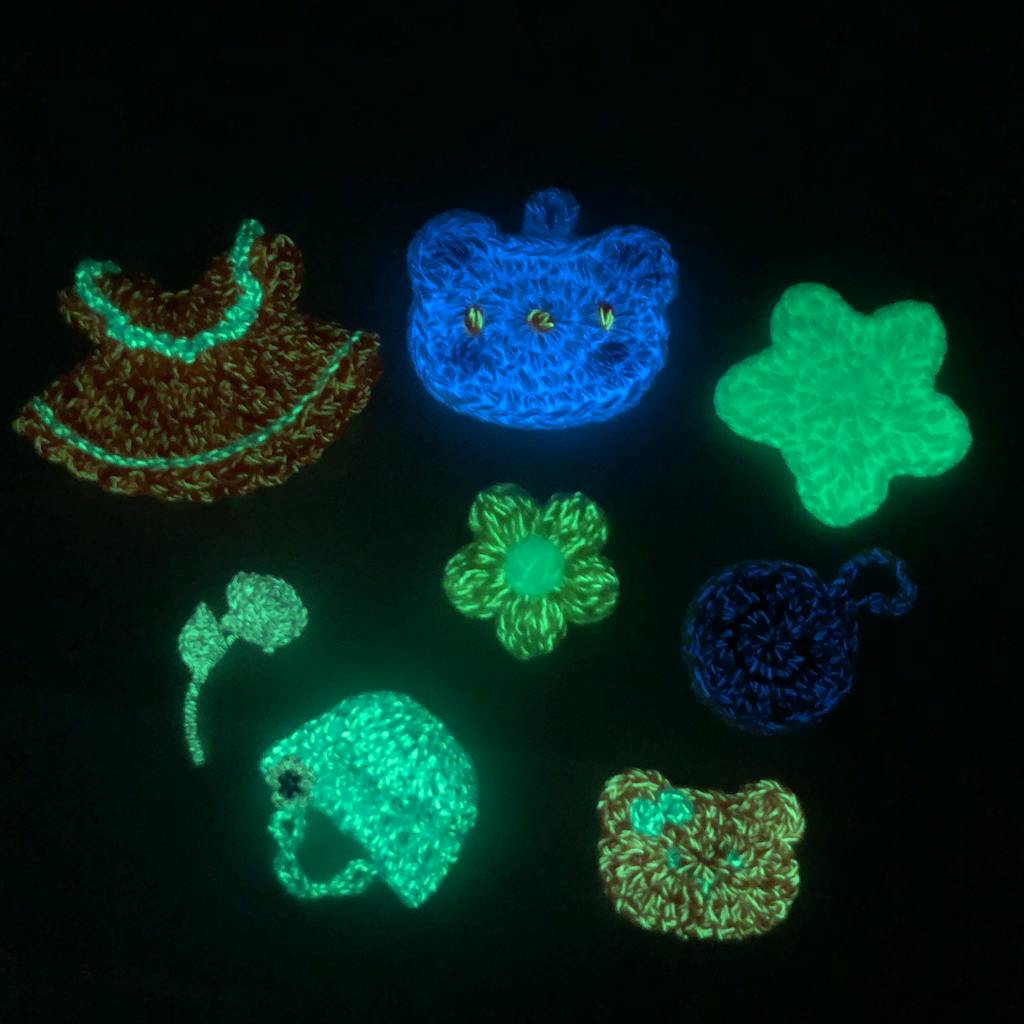
- The result: when viewed in the dark, the glow appears as bright stripes or strands running through the project, rather than an even overall glow.
Which Method Is Better?
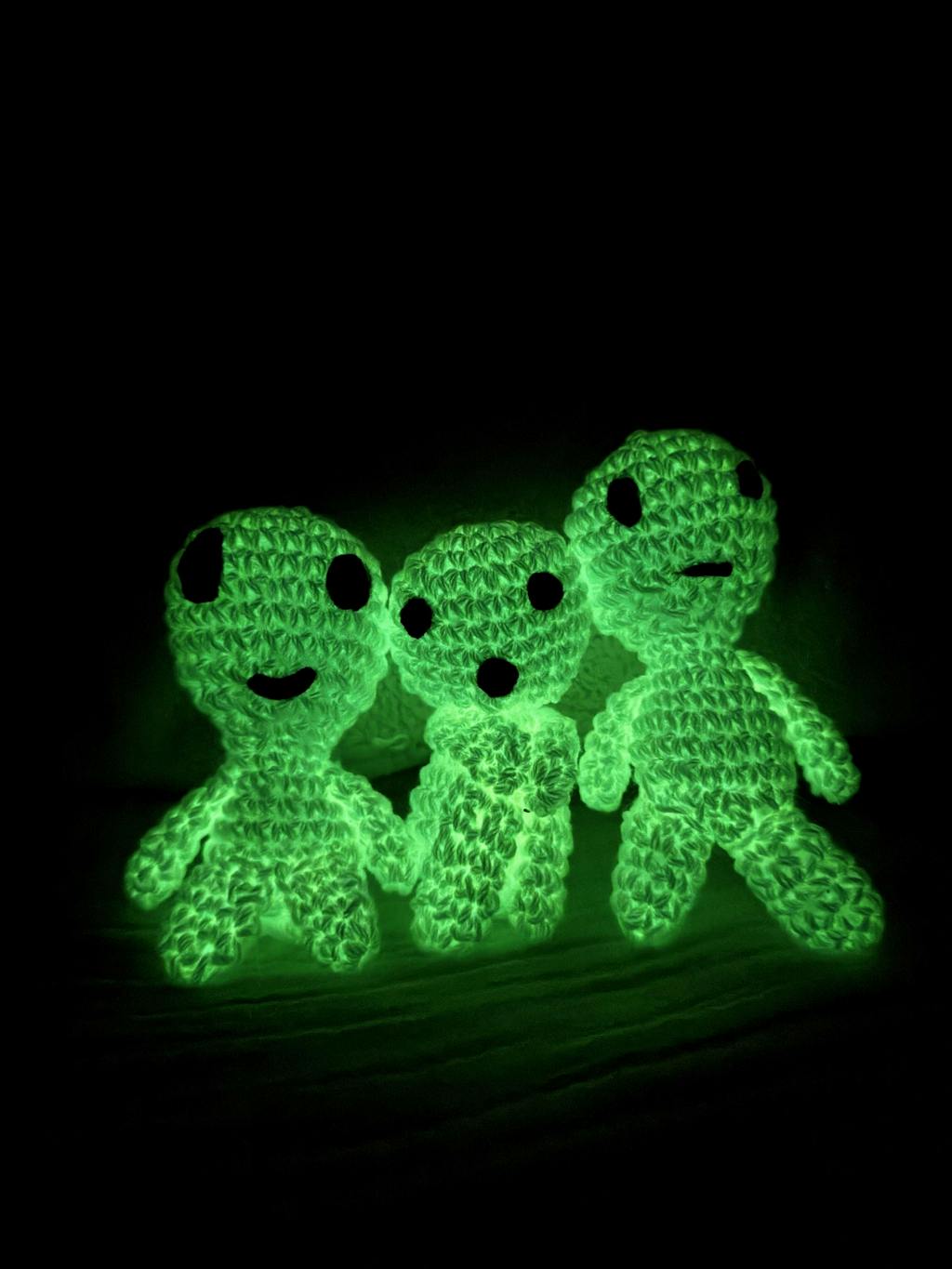
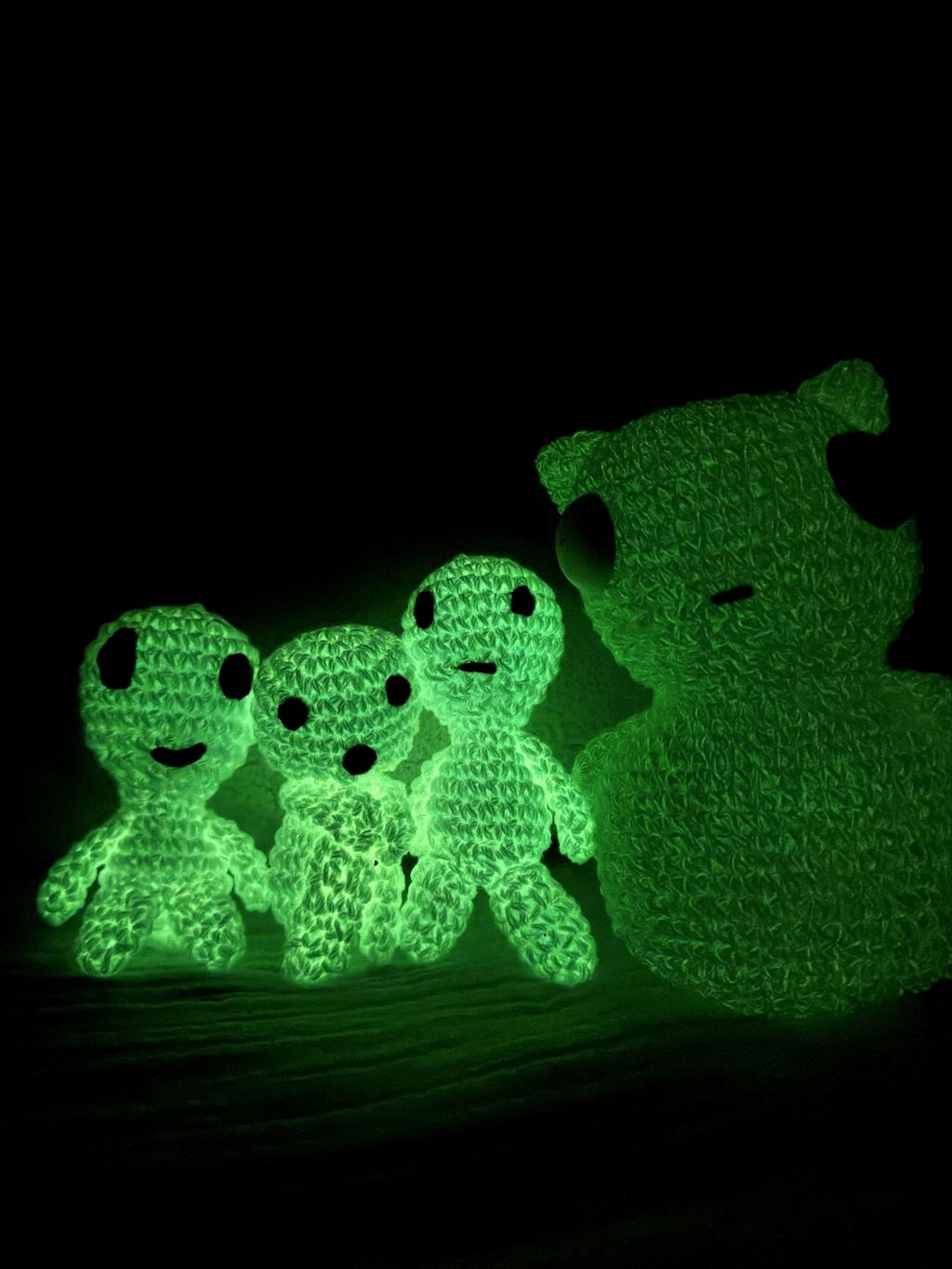
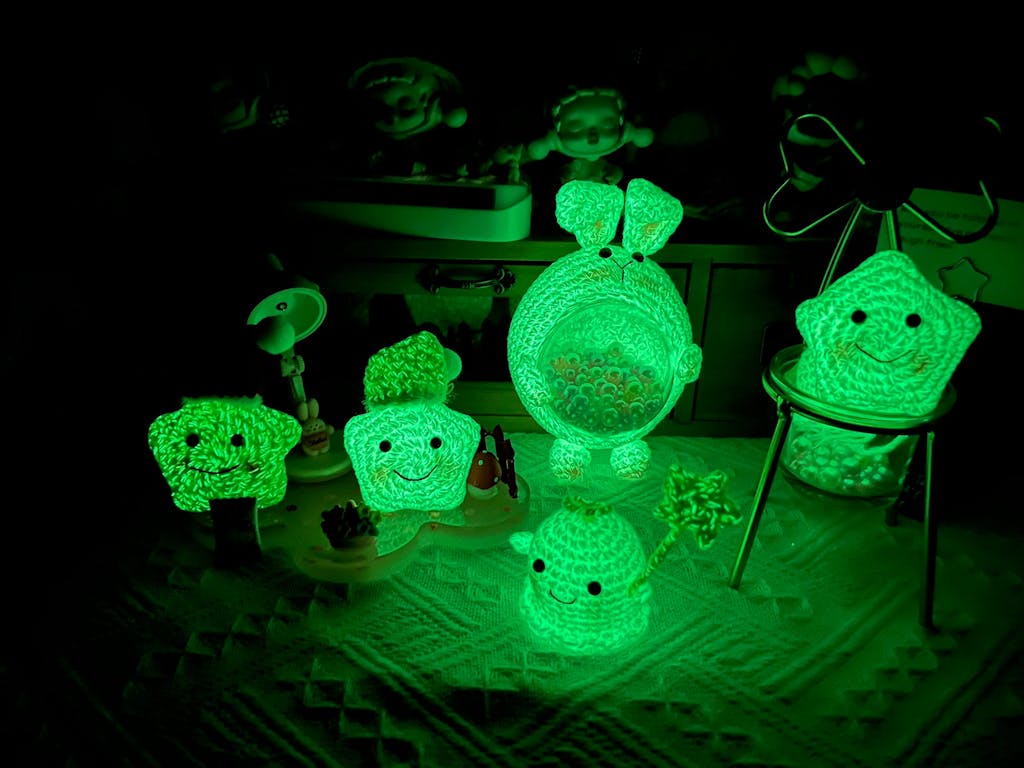
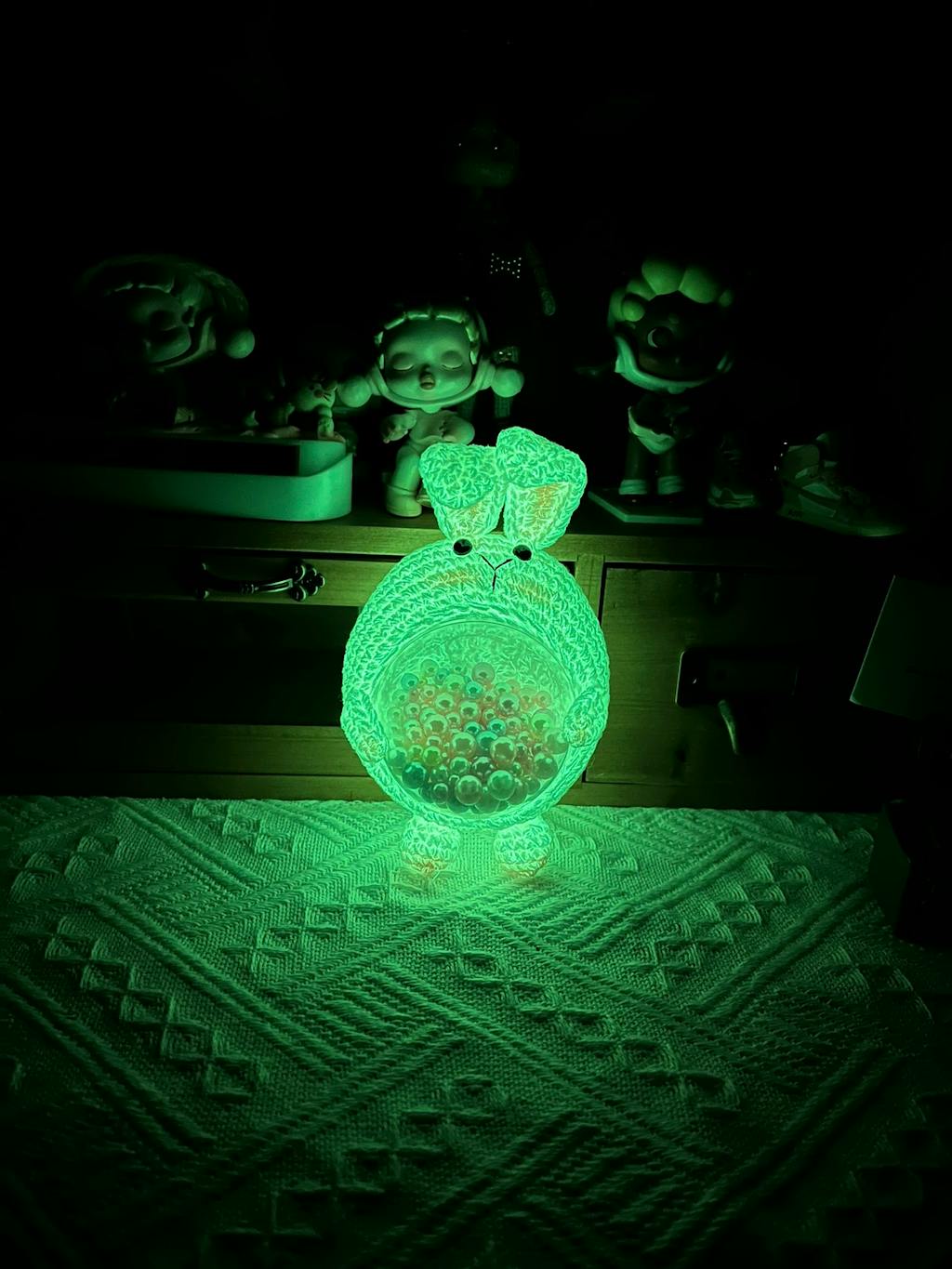
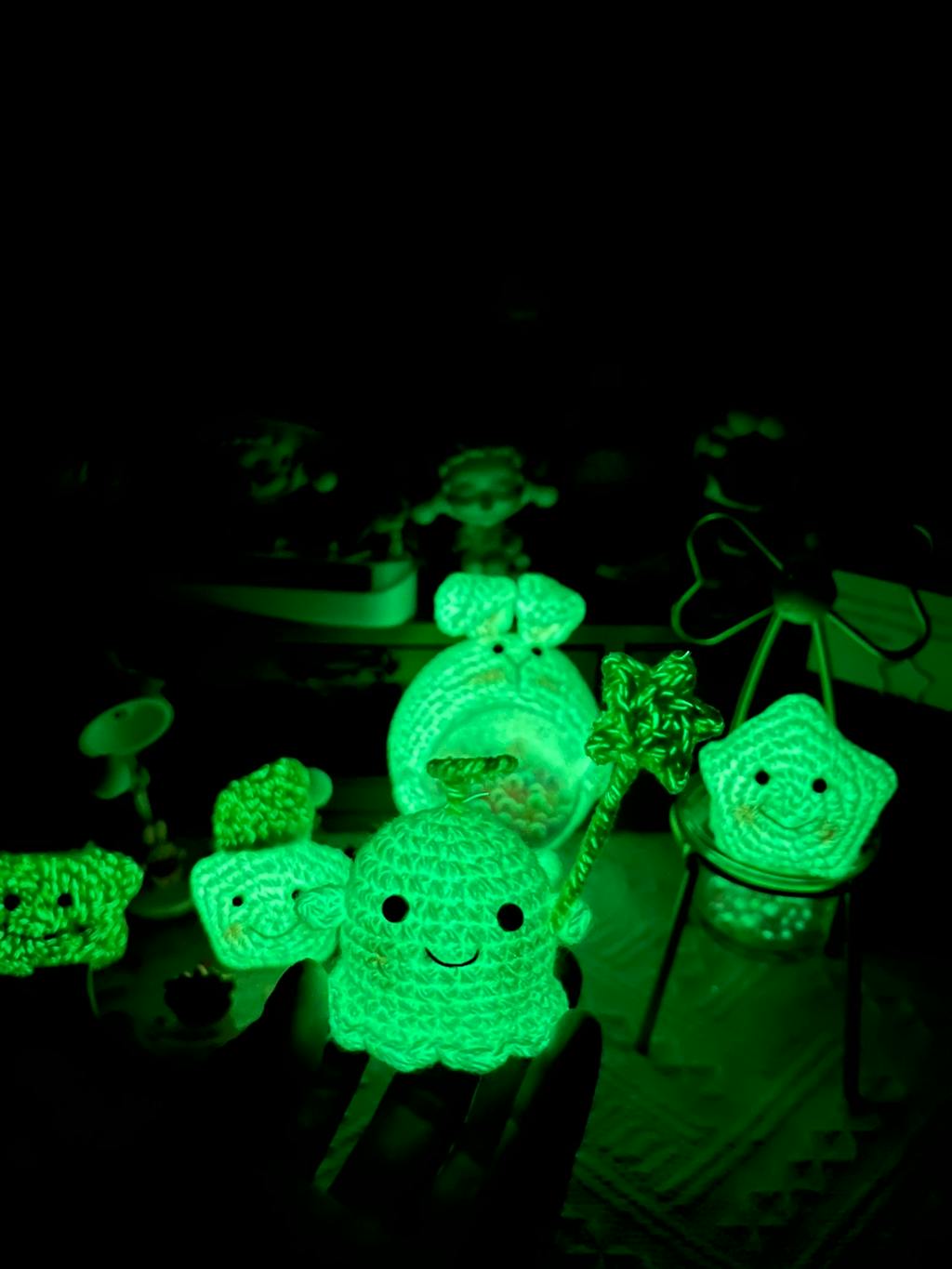
- Uniform glow (masterbatch) — better for single-color projects, amigurumi, and any piece where you want the entire surface to glow evenly. Brighter overall glow.
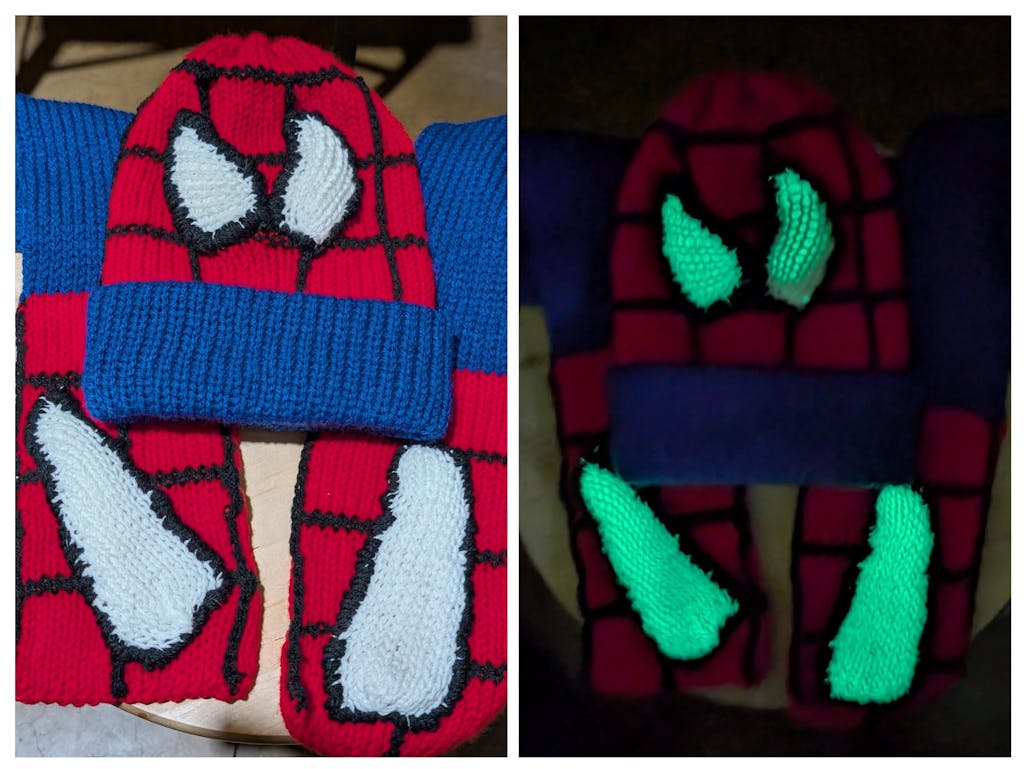
- Striped glow (plied filament) — better for accent effects, multi-color projects, and when you want glowing lines or patterns within your design. Creates unique visual texture.
Why Choose BlingBlingYarn Glow Products?
BlingBlingYarn is backed by an in-house textile manufacturing facility operating since 2003. We control the entire production process — from pigment selection to final yarn finishing. This means consistent quality, factory-direct pricing, and the ability to develop custom glow intensities and colors. Our pigments are EN71 certified non-toxic and safe for all projects.




Leave a comment
This site is protected by hCaptcha and the hCaptcha Privacy Policy and Terms of Service apply.